Employee Spotlight: Carrie Ward, Chief Operating Officer
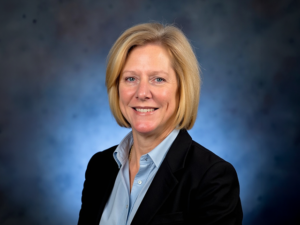
Carrie Ward, Chief Operating Officer, is a key leader at Qlarant with a focus on strategy and execution. In this Q & A, Carrie shares insights into her perspectives on Qlarant’s mission, her team’s work, their challenges and successes, and the core values that create and maintain Qlarant’s thriving company culture.
Can you describe your role at Qlarant and how your group contributes to the company’s mission?
Carrie: As Chief Operating Officer, my role is really about connecting strategy with execution. I work across our operational teams, business development, marketing, technology, ISO, and leadership to make sure we are not only delivering high-quality work for our customers today, but also preparing Qlarant for where healthcare, government programs, and technology are heading.
Qlarant has a long history of improving the quality, integrity, and performance of programs that affect people’s lives. Our Corporate Development group helps support that mission by making sure our teams have the right processes, technology, resources, and partnerships to do their best work. We also spend a great deal of time looking ahead and identifying new opportunities, improving how we operate, and finding better ways to use data, analytics, and emerging technologies to solve difficult problems.
What are some of the biggest challenges your team tackles, and how do you work together to overcome them?
Many of the problems we work on are complicated by nature. We operate in environments involving large government programs, healthcare data, regulatory requirements, program integrity, rapidly changing technology, and enormous amounts of information.
One of our biggest challenges is finding ways to make those complex environments more efficient without sacrificing quality and security. That requires collaboration. Operations may understand the workflow, technology understands what can be built, our subject-matter experts understand the program, and business development understands what clients are asking for. The best solutions happen when we bring those perspectives together rather than trying to solve problems in isolation.
How does your team’s work directly impact the people or communities served by Qlarant?
It can be easy to focus on contracts, data, investigations, deliverables, and performance measures and forget that there are real people behind all of them. When we help identify fraud, waste, or abuse, improve quality of healthcare programs, or make a process more effective, ultimately, we are helping protect programs that millions of people depend upon. We are also helping ensure that limited healthcare and government resources are available for the people who legitimately need them. That connection to the individual beneficiary/recipient, family or community is something I think is important for us to remember.
What recent project or initiative are you most proud of, and why?
One initiative I am particularly excited about is our work around artificial intelligence and application modernization. We are taking a very deliberate approach to identifying where AI can genuinely improve the way our employees work, not simply implementing AI because it is the newest technology. We are looking at existing applications and workflows and asking: Where are people spending unnecessary time? Where are we performing repetitive tasks? Where could technology help someone identify information or patterns more quickly? And where does human judgement absolutely need to remain part of the process?
I am proud of this initiative because it combines innovation and something that has always been important to Qlarant: subject-matter expertise. The goal isn’t to replace that expertise. It is to give talented people better tools and allow them to spend more of their time on the work that requires their knowledge and judgment.
How do you stay aligned with Qlarant’s values, especially around quality and collaboration in your daily work?
For me, quality and collaboration are closely connected. Quality isn’t something that happens at the end of a project when someone reviews a deliverable. It begins with how we design the work, how clearly, we communicate the expectations, how willing we are to challenge assumptions, and whether we involve the right people in the decisions.
Collaboration also means being willing to listen. Some of the best ideas in our organization don’t originate in the executive team. They come from the people doing the work every day. Part of leadership is creating opportunities for those ideas to surface and then helping remove the barriers that prevent good ideas from becoming real improvements.
What partnerships or collaborations have been key to your group’s success?
Both internal and external partnerships are extremely important to us. Internally, some of our strongest results come from bringing together people from operations, IT, analytics, finance, business development, and our subject-matter experts. Each group sees a problem through a slightly different lens.
Externally, our relationships with our industry partners and customers allow us to combine capabilities and expertise that would be difficult for any organization to replicate alone. Particularly in the government contracting environment. I think the future increasingly belongs to organizations that know what they do exceptionally well and also know when to bring the right partners to the table.
Can you share a moment or experience that really affirmed the importance of the work you and your team do?
For me, those moments often happen when you see the connection between what can appear to be a very technical piece of work and its real-world impact. In program integrity, for example we can talk about analytics, investigations, improper payments, or return on investment. But behind those numbers is something much larger, we are helping protect programs that people rely on for healthcare.
Whenever you see the results of an investigation or a solution that allows our teams to identify problems faster, it reinforces that this isn’t simply contract work. There is public trust associated with what we do, and that makes the work meaningful.
What do you see as the biggest opportunities for growth or change within your group in the next year?
I think one of our greatest opportunities is combining Qlarant’s decades of institutional knowledge with the capabilities that are now emerging through AI, advanced analytics, automation, and agentic technologies. These tools can enable Qlarant to branch out of our traditional work in Medicare and Medicaid into other government agencies (i.e., FEMA, Department of Interior, and Department of Energy).
Technology is changing incredibly quickly, but technology alone isn’t a competitive advantage. Knowing how to apply it to a real problem is. We have people who deeply understand healthcare programs, program integrity, quality improvement, data, and government operations. If we can combine that expertise with modern technology and rethink some of the applications and processes we’ve historically used, there is tremendous opportunity not only to work more efficiently, but to create entirely new solutions for our customers.
How do you support professional development and morale within your team?
I believe people grow when they’re trusted with meaningful responsibility and given opportunities to stretch beyond what they’ve done before. That means encouraging people to bring forward ideas, participate in initiatives outside their traditional roles, learn new technologies, and work with colleagues from other areas of the company. It also means recognizing that development isn’t identical for everyone. Some people want to lead teams, some want to become deeper subject-matter experts, and others want opportunities to build something new.
Morale also comes from understanding why your work matters. People want to know that their contribution is seen and that is connected to something larger than an individual task.
What advice would you give to someone looking to work for your team at Qlarant?
Be curious!
The people who tend to thrive in our environment aren’t satisfied with simply knowing how something has always been done. They want to understand why it’s done that way and whether there might be a better approach. “Change” is AWESOME, “adapting” is necessary!
I would also tell someone to be comfortable collaborating with people who know things they don’t. You don’t need to be the smartest person in every conversation. You need to be willing to learn, contribute your expertise, ask good questions, and listen to other perspectives.
Finally, care about the vision and mission! Whether you’re working in IT, data analytics, investigations, medical review, operations, business development, marketing, or quality, the work ultimately affects people. If you keep that in mind, it gives purpose to everything else we do.