Qlarant Foundation Grant to Georgia Lions Lighthouse Foundation Helps Provide Vision Care for Uninsured

As part of the effort to expand the Qlarant Foundation grant footprint, the Foundation provided an $8,000 grant to the Georgia Lions Lighthouse Foundation (GLLF)—one of the only statewide providers for uninsured and under-insured patients, falling under 200% of the federal poverty level guidelines in need of comprehensive vision care.
Qlarant Foundation funds support the Indigent Vision Care Clinics and two optometric technicians who will routinely provide vision services in federally qualified health centers in Southern Georgia.
According to GLLF CEO Beth Ehrhardt, “the GLLF provides vision services through education, detection, prevention, and treatment. Through collaborative partnerships, we enable greater independence and increased quality of life for Georgians in financial need.”
GLLF serves Georgians of all ages, at or below 200% of poverty, who are uninsured/ underinsured. They strive to serve the 52 counties with little to no vision providers (vision deserts)—many clients are children, women, historically marginalized people, and elderly—disproportionately affected by vision loss.1.4 million Georgians do not have insurance.
For over 75 years, GLLF has had to pivot many times to be innovative and resourceful to remain relevant. Despite a strong track record of providing vision clinics and outreach activities, during the COVID 19 pandemic, they were unable to provide vision care due to a lack of resources.
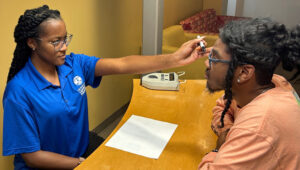 “We found ourselves at the grassroots level again, after Covid-19, when many volunteer doctors did not return to GLLF. It became clear that Georgia Lions Lighthouse Foundation needed to adopt new ways of meeting the needs of Georgians,” continued Ehrhardt. “Undaunted, we developed our high-tech tele-optometry program, partnering with Georgia’s federally qualified health clinics seeing patients, ages 15 and older in May 2022.”
“Using high-tech equipment, we bring optometrists and opticians remotely to Georgians in rural communities that are vision deserts. This service is a game changer in communities where there are no vision providers and is gaining momentum.”
In 2026, GLLF looks forward to serving even more Georgians in need of comprehensive vision care. To accomplish this, they plan to implement a second lane of tele-optometry. They already have a second van and the equipment and will hire two optometric technicians who will routinely provide vision services in Federally Qualified Health Centers, in Southern Georgia.
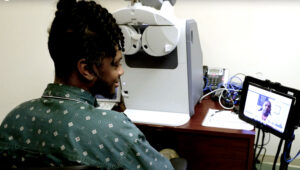 “This unique tele-optometry program focuses on one goal—serving patients who need us most where they live,” added Ehrhardt. “By using cutting-edge technology, we can provide services in areas of the state with little to no access to vision services.”
GLLF’s tele-optometry program aligns with Qlarant’s mission by providing specialized vision care to underserved populations. While Qlarant works across various healthcare sectors to reduce disparities, both organizations are united in their shared commitment to improving healthcare access, quality, and outcomes for underserved communities.